Sergey Prokudin-Gorsky
1863 – 1944
The Russian Empire in colour, a decade before the Revolution
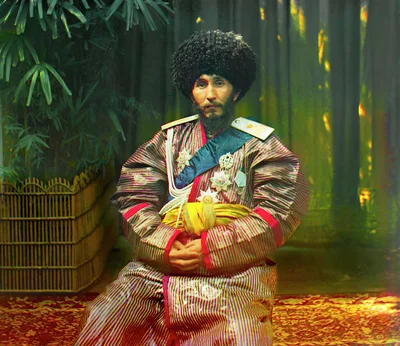
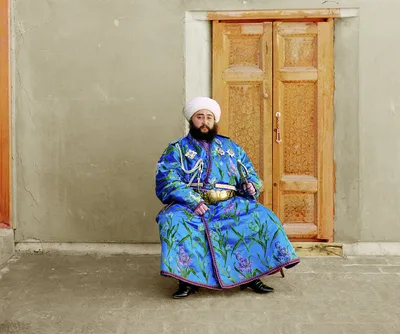 Emir of Bukhara (Alim Khan), 1911
Signature Work
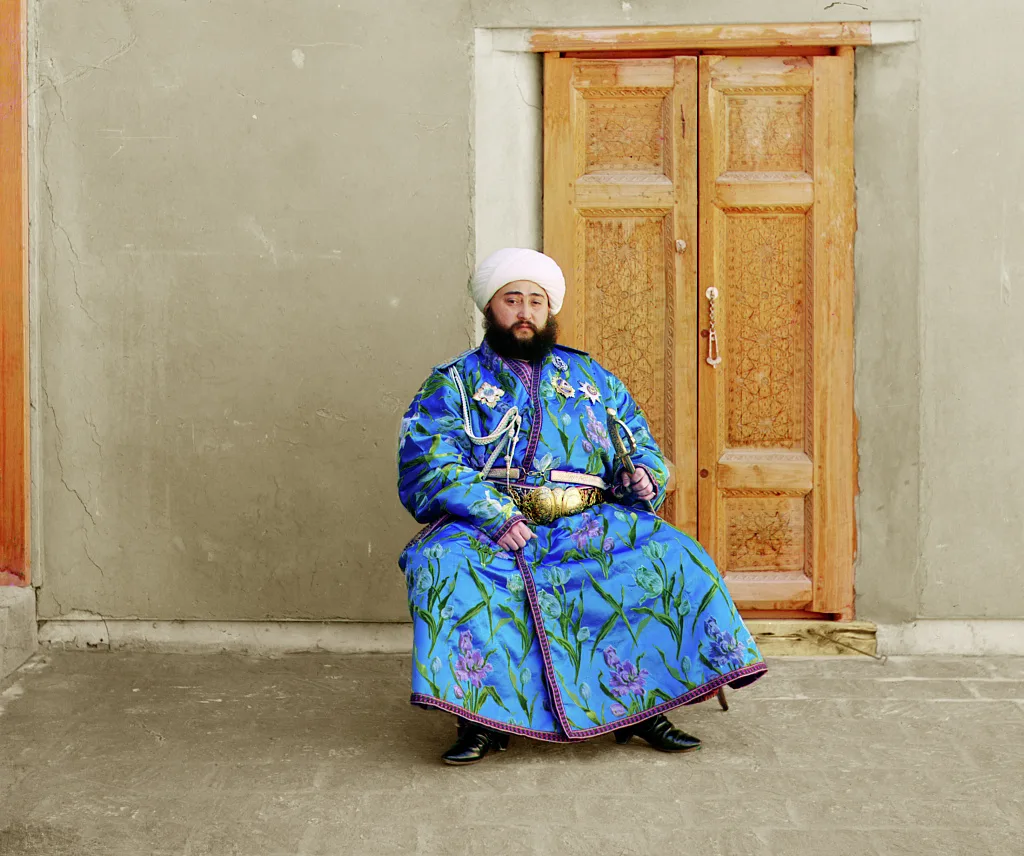
Emir of Bukhara (Alim Khan), 1911
Photo shows the Emir of Bukhara, Alim Khan (1880-1944), posing solemnly for his portrait, taken in 1911 shortly after his accession. As ruler of an autonomous city-state in Islamic Central Asia, the Emir presided over the internal affairs of his emirate as absolute monarch, although since the mid-1800s Bukhara had been a vassal state of the Russian Empire. With the establishment of Soviet power in Bukhara in 1920, the Emir fled to Afghanistan where he died in 1944. The Emir of Bukhara (Alim Khan), Bukhara — an early colour photograph by Sergey Prokudin-Gorsky, taken in 1911 (Bukhoro, Uzbekistan). Subjects: clothing & dress, bukhoro, uzbekistan, rulers, asia. Made with his three-exposure colour-separation method on a single glass plate; Prokudin-Gorskii Collection, Library of Congress. The Emir of Bukhara (Alim Khan), Bukhara — an early colour photograph by Sergey Prokudin-Gorsky, taken in 1911 (Bukhoro, Uzbekistan). Subjects: clothing & dress, bukhoro, uzbekistan, rulers, asia. Made with his three-exposure colour-separation method on a single glass plate; Prokudin-Gorskii Collection, Library of Congress. Original Russian caption: [Emir Bukharskii. Bukhara].
Bukhoro, Uzbekistan
Sergey Mikhailovich Prokudin-Gorsky (the Library of Congress spells the name Prokudin-Gorskii) was born in 1863 in Vladimir Province, in the heart of old Russia. The Library of Congress gives his birthplace as Murom, correcting an older belief that he was born in St. Petersburg. In the late 1880s he studied painting and chemistry, the latter under Dmitri Mendeleev, and he continued his training in Berlin and Paris. In 1890 he married Anna Lavrova.
Chemistry, rather than art, was the foundation of his photographic career. He apprenticed in photochemical laboratories, followed the colour research of Adolf Miethe in Germany, and from 1897 presented his own work to the Imperial Russian Technical Society. He showed black-and-white photographs at the 1900 Paris Exposition, edited the journal Fotograf-liubitel from 1906, and that same year won awards in Antwerp and Nice for his colour photography. His research eventually produced patents for making colour film slides and for projecting colour motion pictures.
In 1907 he set out a plan for a systematic colour survey of the Russian Empire, intended above all to teach Russian schoolchildren about their country's history, culture and modernisation through 'optical colour projections' of the empire. In May 1908 he photographed Leo Tolstoy at Yasnaya Polyana; the colour portrait became his best-known work during his lifetime. The same year Grand Duke Mikhail Aleksandrovich introduced him to Tsar Nicholas II, and in early 1909 the Tsar invited him to present his work at Tsarskoye Selo. He came away with official backing: a railroad car fitted out as a darkroom and two permits that opened restricted areas and secured the cooperation of officials.
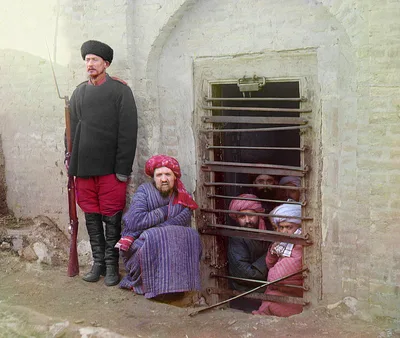
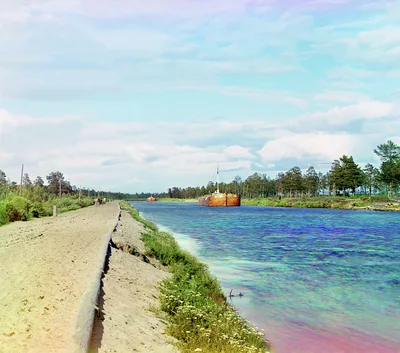
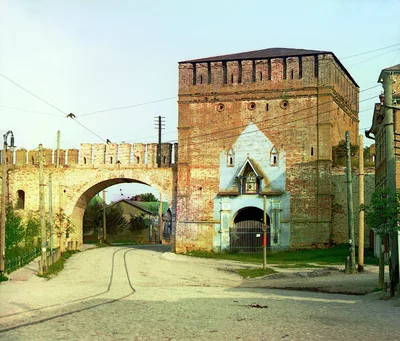
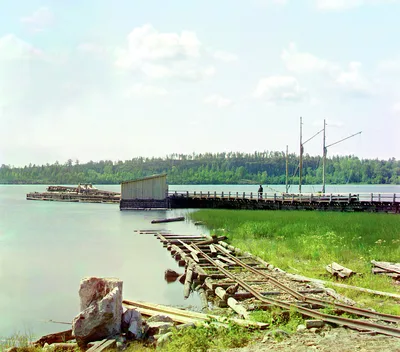
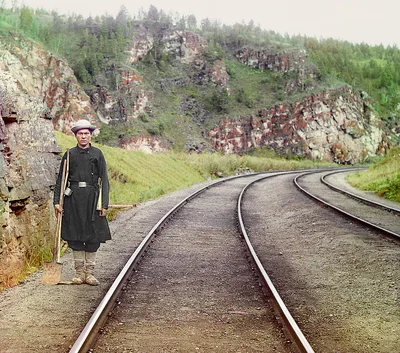
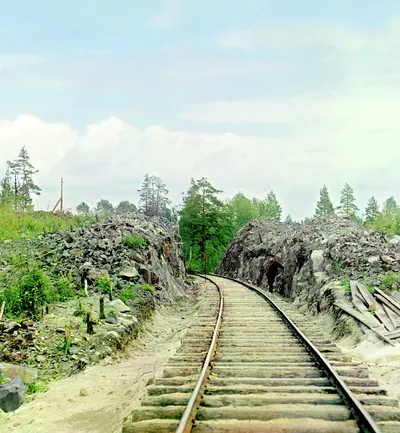
Between 1909 and 1915 he travelled the empire with his camera. In the summer of 1909 he followed the Mariinsky canal system, the waterway linking the Volga to the Baltic, and photographed the Urals. In 1910 he worked along the Volga; in 1911 he travelled to Turkestan; in 1911 and 1912 he photographed the places associated with Napoleon's 1812 campaign for the war's centenary; and in 1912 he recorded the Kama-Tobol water route and the Oka River. Official support ended in 1912, the year he founded the Biochrome company, but it resumed briefly in 1915, when he documented the new Murmansk Railway, including Austro-Hungarian prisoners of war at work in the north.
After the Revolution he left Russia in the summer of 1918, going first to Norway and then to England, and in 1922 he settled in France. By then the imperial family had been killed and the empire he had photographed no longer existed. He died in Paris in September 1944.
In 1948 the Library of Congress bought his surviving glass plates from his heirs. The collection lay largely unseen in colour until the Library began digitising it in 2000. Walter Frankhauser's 'digichromatography' renderings were shown in the Library's 2001 exhibition The Empire That Was Russia, and in 2004 Blaise Agüera y Arcas made digital colour composites from all 1,902 negatives for the Library, bringing the whole survey back into colour.
A Career in Images